
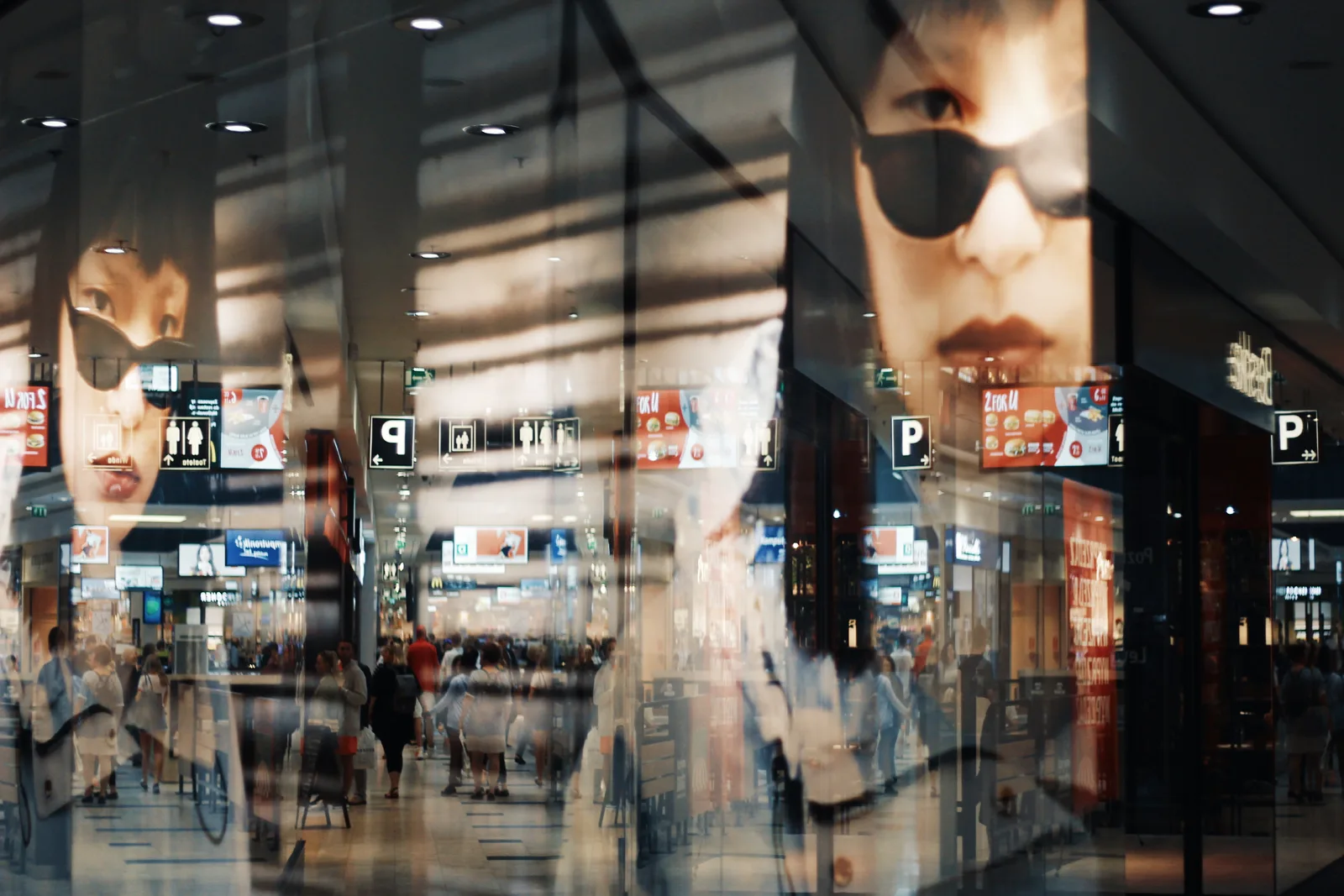
In-Store Retail Media
In-store retail media
Plan in-store retail media around shopper context, stocked stores, suitable creative and a credible way to assess sales.
In-store retail media is advertising in a retailer’s physical space, using retail data for planning, delivery or measurement. Formats include digital screens, audio and static displays. For an Australian brand, start by checking whether the message will appear in stores where shoppers can act on it.
Start with the shopping decision
Name the product, the shopper action and the stores that can support it. A new product may need an introduction; a familiar one may need a reminder near its category. Broad awareness and helping someone find a particular item need different placements and measures.
Request a store list and placement map before choosing a format. Entrance screens, aisle displays, checkout screens and store audio create different chances to encounter an ad. IAB Europe’s proposed five-zone framework describes five broad store zones, but a retailer’s layout and available inventory may differ.
Digital signage beyond promotion
Australian and New Zealand retailers use digital signage to support store navigation, product discovery and key information, not only promotions. Retail Show Australia 2026 is scheduled to explore this trend, with exhibitors including Just Digital Signage.
Department stores such as David Jones use LED signage to highlight promotions and guide customer journeys. Retail digital signage can also use real-time, data-driven messaging — targeting by demographics, time of day or weather — to personalise promotions and product recommendations.
Match the placement to the job
| Placement to investigate | Planning question | Limit to check |
|---|---|---|
| Entrance or general screen | Can the message introduce the product or direct shoppers to its category? | Store traffic alone does not show who saw the ad. |
| Aisle or shelf-adjacent screen | Is the product ranged and findable near the placement? | A category-level booking may include stores or aisles that do not carry it. |
| In-store audio | Can the product and next action be understood without a picture? | A play log does not show who heard the message. |
| Checkout screen | Can the shopper still take the requested action? | The product may be difficult to retrieve at this point in the trip. |
These are possible uses, not a ranking of effectiveness. Cartology has announced front-of-aisle screens in Woolworths supermarkets. That historical announcement does not confirm availability for a particular store, category or campaign date.
Australian in-store screen examples
In September 2023, Cartology announced it would digitise health, beauty and baby aisles in over 400 Woolworths Supermarkets stores nationally, using a premium full-motion digital front-of-aisle screen network. The rollout began with client campaigns live from mid-September; first advertisers included P&G and Unilever.
Research cited in the announcement found four in five customers make monthly purchases from the health and beauty category, and 68% notice or engage with retail media while shopping for health and beauty products. Cartology also said over 30% of customers exhibit omnichannel behaviours, while in-store remains the leading way to shop.
The expansion followed Cartology's Shopper, Metro and BIG W screen networks. Steve Geelan, Head of Product and Platform at Cartology, said the format lets more brands have a presence at the point of conversion, with greater creative flexibility for integrating brand assets. Chris Charlton, Customer Director at Unilever, said the opportunity was to reach customers in a key moment for inspiration and conversion.
Key stats from Cartology’s Woolworths digital signage rollout
- Number of stores
- 400+
- Category focus
- Health, beauty and baby
- Customer engagement rate
- 68%
- Omnichannel shoppers
- >30%
Key milestones in Australian in-store retail media adoption
- September 2023Cartology announces digitisation of health, beauty and baby aisles across 400+ Woolworths stores
- Mid-September 2023First client campaigns launched with P&G and Unilever
- 2026Retail Show Australia 2026 explores digital signage for navigation and discovery beyond promotion
- September 2026IAB Europe opens consultation on new in-store retail media measurement proposals
- 23 October 2026Deadline for feedback on IAB Europe’s proposed measurement standards
Check product availability and creative
Match the proposed media stores and dates with the advertised SKU’s ranging and promotion plan. Keep uncertain stores separate. Being ranged does not guarantee an item will be in stock throughout the campaign, so agree who monitors gaps and whether a placement or offer can be paused.
Obtain current dimensions, orientation, slot length, loop, sound rules and approval requirements before making the asset. Put the product and main idea early: a shopper may pass a screen partway through a loop or miss part of an audio announcement. Check claims, price and directions against participating stores.
Separate delivery from sales effect
Ask for active stores and dates, ad plays, outages and the method behind any estimated impressions. The IAB Europe proposal focuses impression measurement on footfall and the opportunity for visual contact with an ad, not ad play alone. Ask which traffic, zone and share-of-voice assumptions the estimate uses.
Agree on products, comparison stores or periods, promotions and stock gaps before launch. A sales rise during a campaign is an observation. Estimating additional sales needs a credible comparison and an account of other changes. IAB Europe opened proposed measurement changes for comment in September 2026, so confirm the method a retailer will actually use rather than assuming every network follows the same version of the standard.
What measurement proposals cover
IAB Europe's proposed next steps for in-store retail media measurement include a simplified model for calculating opportunity to see from six inputs: footfall, store count, campaign duration, number of placements, aisle penetration and share of voice. The proposals cover placements from outside the store through to in-aisle environments.
The proposal favours impression measurement based on footfall and the opportunity for visual contact with an ad, not ad play alone. It also proposes greater transparency where impressions are modelled without sensor technology, and a tiered approach to calculating aisle penetration, from full beacon deployment to category-level market research.
The document proposes removing sales lift and brand sales lift metrics and aligning the sales reporting window to 28 days. These remain proposals, not a final standard. The deadline for feedback is 23 October 2026.
Further reading: Einzelhandel: Retail Media als neues Werbegeschäft (theracon.eu).
In this guide
- Choosing digital shelf, screen and audio placementsCompare physical shelf displays, screens and audio by shopper task, product location and the placement evidence a retailer can provide.
- Planning creative for brief in-store exposureBuild screen, shelf and audio messages around one clear product cue, accurate store details and the actual viewing or listening context.
- Comparing store coverage with product distributionJoin media-store and SKU distribution lists, identify gaps and refine the booking around stores that can support the advertised product.
- Designing a store-level test for in-store mediaPlan eligible test and control stores, record actual media delivery and compare sales changes without mistaking attribution for incrementality.