Retail Media Planning
Planning retail media for Australian promotions
Decide where retail ads add value during a promotion, align them with the live offer and stock, and interpret results within the retailer's reporting limits.
undefined
Decide what advertising should add to a promotion before buying it. A lower price may draw shoppers by itself; media has a separate job, such as making an eligible offer easier to find. Approve spend only where the advertised product, live offer, purchase path and available stock support that job.
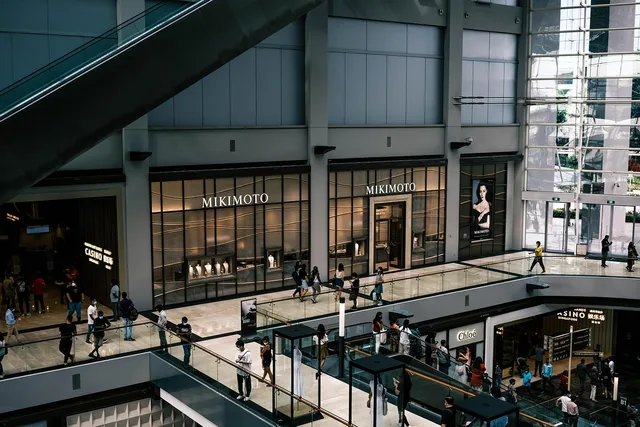
In Australia, retailer media can include digital signage in supermarkets and department stores as well as digital advertising across retailer-owned environments. Treat the offer’s eligible locations and purchase path as boundaries for the campaign message.
Decide where media is useful
Start by asking whether media solves a specific visibility or discovery gap that the promotion does not address on its own. If the offer is already easy for eligible shoppers to find, or the purchase path and availability are not ready, do not add media spend just because a promotion is running.
Start with the exact retailer product IDs, packs and variants. Record participating stores or delivery areas, the approved offer and the period when shoppers can buy it. A campaign that covers more locations than the offer needs narrower delivery or a message that remains accurate across the full footprint.
Choose the media job and a measure that fits it. Discovery may call for evidence that relevant shoppers reached the product. A sales objective needs a defined product and transaction scope. Keep the promotion's overall sales target separate from the media report: a rise during the offer does not reveal how much advertising caused.
For in-store screen delivery, name proof-of-play reporting as the delivery check. Where audience analytics are available, ask what they represent and keep them distinct from sales credited to the campaign.
Consider the economics of the promoted pack before committing more spend. A discount or supplier-funded offer may reduce the contribution earned on an additional unit. Use the economics that apply during the offer and include campaign costs in the budget decision. Reported attributed sales alone cannot establish incremental profit. Request a quote for the placements, dates, production and applicable fees; do not assume rates transfer between retailers.
Set the budget against the market: IAB Australia's Retail and Commerce Media State of the Nation 2026 report found nearly half of retail and commerce media investment is now fully reallocated from other channels, with trade retail budgets and traditional advertising the largest sources of reallocated spend (IAB Australia).
Retail media rate cards establish standard pricing for inventory, typically based on factors such as location, screen size, audience reach and campaign duration (onQ Digital). Retailers can also package screen networks by store group, category, shopper mission, daypart or campaign objective (onQ Digital).
Coles 360 is an Australian example of retailer media using customer data to inform tailored advertising for different consumer segments (E-tail Australia). When targeting uses personal information, check whether the Privacy Act 1988 covers the organisation handling it; the OAIC says the Australian Privacy Principles govern collection, use and disclosure for organisations and agencies the Act covers (OAIC).
The OAIC says there are 13 Australian Privacy Principles covering the collection, use and disclosure of personal information, and that a breach can lead to regulatory action and penalties (OAIC). Check which entity handles the audience data for each booked placement and what it is permitted to do with it.
Mumbrella reported that Cartology completed a rollout of more than 1,600 retail media screens to its health and beauty aisles during the financial year (Mumbrella). Other placements can include LED and LCD signage, storefront displays, shopping-centre media, shelf-edge media and queue displays; onQ Digital lists these among formats retail media platforms may manage (onQ Digital). Confirm that each proposed placement's locations overlap the eligible footprint.
Australia's retail media field now reaches beyond the supermarket duopoly. Mumbrella reports Coles had rolled out Coles 360 digital screens to almost 300 stores by FY25, JB Hi-Fi revealed plans to expand its digital screen footprint from 140 to 250, and Myer is preparing to launch a retail media network (Mumbrella).
The duopoly's own arms have slowed: Mumbrella reports Cartology and Coles 360, the retail media businesses of Woolworths and Coles, both recorded their lowest growth rates ever in FY2026, while Coles 360's retail media income is up 55% since FY23 (Mumbrella). Cartology also launched a new self-service platform for advertisers during the financial year (Mumbrella).
E-tail Australia describes retail media as using consumer data for targeted advertising and gives digital signage in supermarkets and department stores as an example (E-tail Australia). It says retail media is being adopted in the Australian market (E-tail Australia).
IAB Australia's Retail and Commerce Media State of the Nation 2026 report found just 22% of retailers and commerce media networks describe their retail media offering as advanced and 47% describe it as still developing (IAB Australia). Expect uneven capability between networks.
Check the product detail page before driving traffic
For an onsite sponsored placement, check the retailer product detail page that the ad will open. Confirm that it identifies the exact promoted pack and variant, carries the same offer terms as the creative, and leads to a purchase route covered by the campaign.
Compare the pack size, variant and images on the page with the product approved for the promotion. Check that the description helps shoppers distinguish it from other products or packs in the range.
Ask the network which page fields and assets it requires for the booked placement, who approves changes, and when the final listing must be live. Do not transfer a requirement from one retailer or ad format to another.
If the offer depends on a particular price or bundle, check that detail in both the ad and its destination. Confirm that shoppers can reach the matching offer before paying to drive traffic to the page.
Amazon Ads' Sponsored Products guidance concerns that ad format; ask each Australian retailer network for its own current listing checks and eligibility signals before launch (Amazon Ads).
Approve the offer shoppers can actually use
Check the destination and, where relevant, the participating store offer for the exact pack, current terms, availability and route to purchase. Repeat the check when the offer starts or changes. An approved price file or creative preview cannot establish what a shopper can buy at that moment.
Agree in advance who can hold an offer claim, narrow delivery or stop an affected ad if the price appears late, ends early or differs by location. Ask the seller about change deadlines and confirmation for each booked placement. A sponsored listing, display booking and in-store screen may have different controls.
onQ Digital describes retail media platforms as combining content scheduling, campaign governance and advertiser reporting. Confirm which system and owner control each booked placement; platform capabilities do not establish a retailer's specific change deadline or authority to pause an ad (onQ Digital).
Match the approved message to the offer shoppers can actually use, including its price, dates, eligible products and locations, and retain the final terms with the campaign record. The ACCC says a business must be able to prove any claim it advertises; claims should be true, accurate and based on reasonable grounds (ACCC). The Australian Consumer Law applies to social media advertising in the same way as other types of advertising (ACCC).
The ACCC has acted on discount claims: it says Digital Imaging Express Pty Ltd, trading as digiDirect, paid $99,000 in penalties after the ACCC issued five infringement notices for allegedly misleading discount claims (ACCC).
Qualify product readiness for the placement
Amazon Ads recommends advertising products that are reasonably priced, in stock and displaying the featured offer. It also lists a Prime badge and positive reviews among the product-performance considerations in its Sponsored Products guidance.
Those Amazon product signals are listing considerations, not proof that a promotion is available in every store or delivery area. Check the live price, pack and purchase route across the campaign footprint before booking.
For placements outside Sponsored Products, use the retailer's eligibility and availability signals and identify who receives stock-change updates. Record the action owner before committing spend.
Make stock part of the spend decision
Amazon Ads recommends including in-stock products when selecting products to advertise (Amazon Ads). Treat availability as a readiness consideration, not a guarantee across the campaign footprint. If stock cannot support the full footprint, narrow placement or delivery before committing spend, and revisit the decision when availability changes.
Review the campaign at useful moments
Check the offer at launch, after a material price or stock change, when spend changes and when the offer ends. Record the signal, decision, owner and confirmed effective change. At review, place actual media delivery beside offer changes, stock gaps and the retailer's sales definitions.
For an in-store screen booking, ask what proof-of-play reporting the retailer provides and compare it with the booked dates and locations. This helps distinguish planned delivery from the campaign activity actually recorded.
Ask which products received sales credit, whether credit followed clicks or qualifying views, how long the attribution window was and whether reported value reflects returns. Those rules describe credited purchases, not additional purchases caused by media.
For measurement planning, IAB Australia's Retail and Commerce Media State of the Nation 2026 report found 64% of retailers and commerce media networks offered incremental or sales lift measurement and 60% offered ROAS, with 84% planning to enhance measurement over the next 12 months (IAB Australia).
If the next budget decision depends on media's additional sales, plan a credible same-offer comparison before the next promotion. Otherwise, use the campaign record to improve timing, availability and delivery without assigning an unsupported causal figure.
Suppose a brand promotes a particular pack in a defined store group and asks Cartology about health-and-beauty-aisle screens, a placement Mumbrella reports it rolled out (Mumbrella). First match the offer dates and pack to participating stores, then confirm stock and the purchase route there. Record proof of play against booked dates and locations, and compare delivery with the retailer's sales definitions before judging results.
In this guide
- Scheduling retail ads around a retailer's promotional price windowSet retail ad dates and offer creative against the price shoppers actually see, with checks for late starts, early endings and location differences.
- Avoiding ad spend on products close to a stockoutUse SKU and location availability, replenishment and campaign controls to decide when to narrow, reduce or pause retail ads near a stockout.
- Separating promotion uplift from media contributionSee what a promotion sales rise can show, how a same-offer comparison can estimate media contribution, and why attributed sales answer a different question.
- Reviewing retail media after a major sale periodRebuild the offer, stock and ad timeline after a major sale, reconcile delivery and costs, and turn bounded results into decisions for the next campaign.